NOTE: Many, many books have
been penned about the
lives and career of the
Beach Boys, but it is safe
to say that not one
completely captures the
unique, dynamic way in
which the band members
interact, both in and out
of the group.
However, certain authors
are more worthy than
others. I hope this
guide helps the curious
fan discover more about
the undeniably fascinating
lives of the Beach Boys.
These reviews are solely my
own opinion.
The
Beach
Boys:
A Biography in Words
& Pictures
Ken
Barnes; Sire
Books-Chappell Music
Company, 56 p., Released
1976 (out
of five)
"Southern
California
in the early
sixties
produced the
pinnacle of
hedonistic
teenage
existence in
the planet's
history.
All the
elements -
affluence,
leisure,
permissive
parental
attitudes,
weather,
variety and
number of
outlets -
combined to
create Teenage
Nirvana, where
summer really
meant fun and
the beach was
the place to
go . . . Brian
Wilson, just
into his
twenties in
1962, had more
perspective on
it all.
Though not at
all the
overweight
introvert
legend has
painted . . .
Brian was a
reflective
sort, with a
keen
obvserver's
eye." [pg.
11]
REVIEW: Distinguished by
being perhaps the first
biography written about
the Beach Boys, Ken Barnes
had some history to look
back on by 1976, with the
band's golden era
seemingly past, and by
that time a hugely popular
touring act. Less a
biography than a review of
their musical
accomplishments, Mr.
Barnes sets forth the
tried and true "facts"
about the band's history
(apparently gleaned from
magazine and newspaper
articles) and combines
this with his own opinions
about the albums and
singles thus far. He
doesn't shy away from the
band's commerical failings
in the late sixties and
early seventies, and he
relates candidly Brian's
deteriorating condition
through short interview
snippets (taken from other
sources.) As such,
the writing is full of
common errors, which
later, more concientious
biographers have attempted
to correct (such as
claiming that the original
Candix recordings the
Beach Boys made were
re-recorded for Capitol,
when in fact, Capitol
Records simply speeded up
the original tapes to make
them sound younger).
The author can be credited
with gleaning information
from several sources, but
this book will only have
marginal interest for
collectors, since much
here can be found in
deeper, more accurate
biographies.
Originally sold in music
stores, this is very hard
to find item.
The
Beach Boys John
Tobler; Phoebus
Publishing Company, 96
p., Released 1978
"The
result
of Brian
taking over
production
duties had
wider
significance
than simply
providing his
group with a
lot of hit
records.
According to
Nik Venet,
Brian was a
pioneer:
"He was one of
hte first acts
on a
major label
to bust out of
the major
label syndrome
of coming into
their studios
at
their appointed
hours and
using their
facilities,
good, bad or
indifferent,
...He was the
first one to
be allowed to
go elsewhere,
which was a
pretty heavy
trip for a kid
his age.
"Brian
Wilson
liberated
California for
producers and
musicians.
New York was
the center for
recording, and
he brought a
lot of action
into
California for
young
producers and
musicians.
. . . He also
was the first
guy to do it
[make a
record] until
it was
right.
He damned
everybody till
it was right,
and then he
gave them the
record -- he
took his
chances.
A lot of us
would get
chicken after
four hours,
and say 'We'd
better get off
that
tune.'
Brian would
hang in there
for nine hours
no matter what
the
cost. I
used to think
he was crazy,
but he was
right." [pg.
15]
REVIEW: A
better introduction to the
Beach Boys than the
similarly brief
"authorized" biography
(see below), John Tobler
takes a balanced
view of the first
decade-and-a-half of the
band, using many first
hand accounts, and not
glossing over the band's
problems. Drawing on
personal interviews,
magazine and newspaper
reports, and his own
inimitable writing style,
this book was the best
biography of the Beach
Boys written to
date. Despite this,
the author also manages to
perpetuate several
fallacies which have
endured over the years,
and the slang he uses in
his prose is often very
much of the times.
That makes this book
something of a time
capsule for readers as
they come
across phrases like
"what would be Dennis
Wilson's major hassle of
1968" (referring to
Charles Manson), or broad
generalizations such as
noting that "it's very
difficult to judge just
how important [Sunflower]
really is." [p.
57] The book's
biggest fault is the
overuse of second-or
third-hand information to
stitch together his
narrative, which shows
that this book was not
diligently researched for
accuracy. Mr.
Tobler divides the book
into five chronological
periods; includes
many photographs from all
periods of the group's
career, many not available
elsewhere; and includes an
out-of-date U.S.
discography. Again,
this book is probably too
brief and out-of-date for
most fans' tastes, but
it's a good, short
introduction to the Beach
Boys.
The
Beach Boys: The
Authorized Biography
of America's Greatest
Rock and Roll Band
Byron
Preiss, 1979; St.
Martin's Press, 96 p. ZERO STARS
"America
went
to the beach,
whether it was
there or
not. In
Colorado, the
Astronauts
sang of
woodies; in
industrial
Michigan, the
Rivieras did
odes to the
summer; and in
frigid
Minnesota, the
lyrically
distinctive
Trashmen
professed a
love swimming,
surfing, and
ninety-nine
days of
vacation.
...The
Beach
Boys had
exploded not
one trend but
two, and in
doing so, sent
shock waves
thorugh the
recording
industry.
"409" was the
biggest car
song since
"Maybelline,"
with none of
the lyrical
ambiguity of
the Chuck
Berry
classic.
The
distinctive
voice of Mike
Love, blaring
from hundreds
of thousands
of transistor
radios that
summer, sung
forcefully. .
. about
displacement
figures in
cubic
inches.
Mike's
"Surfin'
Safari," fast,
funky and
authoritative,
with
percolating
background
vocals and
infectious
pacing, gave
the news on
America's
biggest
craze--"Surfin's
getting bigger
from Hawaii to
the shores of
Peru."
[pg. 12]
REVIEW:
No surprise here
- the "authorized"
biography (a
skimpy ninety-six pages)
is a worthless,
whitewashed waste of
woodpulp.
Disjointed, with random
quotes interrupting the
fawning narrative, and
super-bleached of any
whiff of scandal or group
in-fighting, this piece of
propoganda serves no
useful purpose other than
to distort the
truth. Instead of
being a competent
biography, this sad excuse
for a book reads like it
was written by one-time
Beach Boys publicist Derek
Taylor, full of gee-whiz
exclamation points, and
treating the reader as if
we're all still in the
seventh grade. Stale
superlatives abound: "American
rock
music and production in
1964 was a silver mine"
; ""Drive-In" was a
mini-spectacular, a
funny salute to
suburbia's teenage
passion pits" ; and
most damning: "...in
1966, Pet Sounds did not
suit the traditional
rock marketplace.
Who could dance to "I
Just Wasn't Made for
These Times"?"
[p.
39] Such
calculating, coldly-cynical
epithets fill this book
like refuse in a garbage
heap, leaving the distinct
odor of crass
commercialism.
What's left for the reader
is bleak facts; i.e.,
album sales, concert
venues, lots of stock
publicity photos, and an
Ozzie and Harriet-like
distillation of 'America's
Band'. It's easy to
see: in the paragraph
above, who is the author
of "Surfin' Safari?"
Mike Love's fingerprints
are all over this book,
and he's not about to show
any dirty laundry and
jepordize his
paycheck.
The
Beach Boys and the
California Myth
David Leaf; Courage
Books, 208p., Released
1978, 1985 [revised]
"When
Brian's
music turned
from the happy
California
sound to a
more serious
examination of
his emotions,
htere was a
rebellion
within the
group and
resistance
from the
record
company.
Brian's
defense was to
retreat into
an eccentric
character
called Brian
Wilson.
The Brian
Wilson
mystique was
at the core of
the Bech Boys'
machine;
unfortunately,
the game
consumed
Brian.
"...There
was
a time when it
was much
simpler.
Brian's
personal life
has always
been
difficult, but
the music was
once easy and
perfect.
Artistically,
Brian Wilson
was an
instinctual
genius.
He took his
feelings and
put them on
wax. The
catharsis of
his personal
life, by a
pleasant
coincidence,
happened to be
the perfect
medicine for
those
schooltime and
summertime
blues...
[Brian
created] this
magical place
where life
revolved
around the
beach, and
that short
step from your
woodie to the
sand would
attract
amazonian
blondes.
Sexist?
Yes. But
eternally
seductive." [pg.
7]
REVIEW: A very personal
look at the life and
career of Brian Wilson,
not The Beach Boys,
contrary to what the title
claims, The Beach
Boys and the California
Myth was the first
book to really place Brian
Wilson as the head of The
Beach Boys, with the other
members being cast as
sidemen. Much like
Dennis Wilson used to
refer to brother
Brian as THE
Beach Boys, and the rest
of the group as his
missionaries, the author
here casts his focus
solely on Brian: his
talents, his troubles, and
his fragile psyche.
Fans who trumpet the
ascension of Brian Wilson
over other band members
often point to this book
as the definitive
statement, but to be
completely fair, it's a
one-sided argument.
Mr. Leaf has been a
longtime fan of Brian's
music, and has scrutinized
the relationship between
the band members and Brian
for many years. His
book, detailing his
observations, is perhaps
the most lucid, honest
writing that has every
been done on Brian Wilson,
and that is the books'
greatest
achievement.
However, if you're looking
for more information on
the band itself . . . look
elsewhere. This tome
addresses the Beach Boys
only in relationship to
how they affected Brian
and his artistic
growth. Mr. Leaf
writes passionately and
convincingly, but still
manages to leave me
feeling as if he's left
something out. If
he'd embraced the band as
well as it's leader, this
would've been the
definitive work on The
Beach Boys. as it stands,
it's the
first compassionate examination
of the notoriously
complex leader of The
Beach Boys, and that's
saying a lot.
The
Beach Boys Silver
Anniversary John
Milward, 1985;
Dolphin/Doubleday,
240p.
"Framed
by
Brian's music,
the Beach Boys
meticulously
recorded the
minutiae of
the American
Sun Belt and
it was both
boring and
beautiful. The
Beach Boys
have never
been far from
superficial.
On the early
records, where
Brian was busy
learning the
techniques
that would
make him a
seminal
producer of
sophisticated
rock and roll,
they worked
their obvious
words in
obvious
ways.
It's no
accident that
the earliest
songs we
remember are
the
fad-oriented
hit singles:
"Surfin'
Safari" and
"409" from the
first album,
and "Surfin'
U.S.A." and
"Shut Down"
from the
second.
From the
outset, the
Beach Boys
have
celebrated the
inconsequential,
the trivial
pursuits, the
things only a
kid could
understand.
Brian sold
fun, and it
was the key
that allowed
him to take
his music out
of his room
and into the
world.
...With
the
sand that
passed through
their toes,
and our toes
too, the Beach
Boys built the
kind of
sandcastles
that are
washed out to
sea but never
really go
away.[pg.
56]
REVIEW:
Published in 1985,
this book jumped the gun a
bit in celebrating The Beach
Boys twenty-fifth
anniversary as a functioning
group, but it's still a
landmark achievement for any
group, and this book is a
fitting tribute to what had
by then become known as
"America's Band."
Thick and glossy, with
numerous photographs unique
to The Beach Boys published
canon, this is an
impressively weighty tome,
and fun to browse
through. But the
author, John Milward,
is a man who
obviously wishes to
immortalize the Beach Boys
in prose. Whether trying
to inject as many song
references in a sentence
as possible, or
alliterating to his
heart's content, I get the
feeling he's not so much
concerned with what he
says, but how he
says it. It makes for
interesting reading,
although some of the
phrases make me groan. The
book also makes several
small errors in his facts
(Chuck Berry recieved SOLE
credit for "Surfin' USA" .
. . actually, Brian and
Mr. Berry shared writing
credit) but then, this
isn't a book about facts,
it's about the experience
of the Beach Boys, and Mr.
Milward visibly struggles
to find adequate
expression for his
feelings. Not a bad book,
and the collection of
photos (many unavailable
elsewhere) are very
good, but overall, I felt
like the book contained a
lot of padding, and lacked
substance. Still
worth checking out, as
it's one of the most
richly laid-out books on
the Beach Boys ever
produced.
Heroes
& Villains: The True
Story of the Beach Boys
Steven
Gaines, 1986
[Dutton/Signet], 1995;
Da Capo Press, 374 p.
"...Brian
arrived
home one day
and said,
"Guess
what?
Loren's got
some of this
LSD and he
wants me to
take it with
him."
"Don't you
dare!" Marilyn
screamed,
though she
hardly knew
what LSD was -
except that it
was bad.
"He said that
I have a very
bright mind
and this LSD
will really
expand my mind
and make me
write better."
"Don't you
dare!"
Marilyn
insisted, near
tears.
"I really have
to do it,"
Brian
said. "I
have to do it,
I have to try
it."
...When
Marilyn
saw Brian the
day after his
first trip, he
looked drained
and
exhausted.
"I'll never do
it again," he
swore.
"But what
happened?" she
asked
him.
"What was it
like?"
Tears welled
in his eyes,
and suddenly
he was crying
and hugging
her. "I
saw
God."
Brian told
her. "I
saw God and it
just blew my
mind."
...Within
a
fortnight
after his
first LSD
trip, Brian
seemed to be
stoned on
marijuana all
the time."
[pg.
133-134]
REVIEW:
Every successful
rock band apparently needs
to have a trashy biography
penned about them, and
this one is The Beach
Boys. The first book
to take an in-depth look
at the seamy side
of a group often
viewed as the "nice" rock
'n' roll band, Heroes
and
Villians
takes a morbid delight in
uncovering as much dirty
laundry about The Beach
Boys as possible, and at
the same time, ripping
away much of the
manufactured veneer the
band had created for
itself following the
runaway success of 1974's
Endless
Summer, and
the band's subsequent
repositioning of itself as
Republican Party poster
boys. Author Steven
Gaines plays fast and
loose with the band's
history, making up
dialogue, using 'yellow
journalism' tactics (i.e.;
interviewing "reliable
sources" such as
disaffected employees and
former lovers), all in his
effort to create a juicy,
sensational pulp
novel. He succeeds
on all counts.
Easily the most readable
book about the band, Mr.
Gaines fluidly recounts
sordid episodes while at
the same time easily
side-stepping the musical
accomplishments of the
group in his quest to
titilate. Dennis'
painfully tragic last days
are minutely chronicled in
the first chapter.
Then flashback:
Drugs?
Affairs? Charles
Manson?
Dysfunctional sibling
squabbles that make your
troubles look like an
episode of "Family
Feud?" Yes,
please. How accurate
is it? Not very, but
who cares? Mr.
Gaines knows the audience
he's writing for, and he
delivers in
spades. Not
for the faint of heart, or
for anyone who likes to
view their favorite band
through rose-colored
glasses. [Note: this book
was later the source
material for the awful TV
movie: Summer
Dreams]
Wouldn't
It
Be Nice: My Own Story Brian
Wilson with Todd Gold;
Harper Collins, 398p.,
Released 1991
"...Each
song
dredged up
memories and
experiences,
most of them
unpleasant,
and Dr. Landy
wanted me to
deal with
them.
I'd spent
years ignoring
these
emotions,
drowning them
in booze,
drugs, and
food.
There was none
of that
anymore.
Instead, we
talked.
Why
do
you think Mike
Love's going
to beat you
up?" Dr. Landy
asked. "Because he hates that his name
isn't on
"California
Girls.'" "Why isn't it?" "I don't know."
"...So what's the problem?" "He's mad at me," I said. "That's Mike's problem," Landy
said.
"Not
yours.
If he's
convinced
himself he
wrote it,
that's his
problem.
Not
yours.
He'll have to
get his own
shrink and
work his own
problems out,
as you
are. Do
you
understand?" I
was starting
to. I
really was. [pg.
299]
REVIEW: Reading this
book is like watching a
car wreck. You want
to look away, but you
can't. Wouldn't
It
Be Nice was a
nuclear bomb in the
life of Brian
Wilson. It sparked
numerous lawsuits
from his bandmates and
family, and eventually
helped in the severing of
the abusive long-term
relationship of himself
and his
psychiatrist/personal
manager, Dr. Eugene
Landy. With material
supplied almost entirely
by Dr. Landy, this
stiffly-written book
attempts to portray
Brian's family and the
Beach Boys as bullying
leeches and Dr. Landy as a
benevolent savior, while
spouting off feel-good
psycho-babble in place of
artistic or personal
insights. There are
several unsavory stories
of familial in-fighting
and abundant drug-use,
unflattering portrayals of
band members and
acquaintances, and a
self-righteous
'us-against-them' attitude
throughout. Most
damning is the
first-person narrative
that the book uses,
clearly speaking in a
voice that is
not Brian's, or even
ghost-author Todd Gold,
but that of Dr.
Landy. What this
book unwittingly
accomplishes is revealing
the depth and breadth of
Brian's and Landy's
unhealthy
relationship. There
are also fascinating
accounts of the extent of
Dr. Landy's treatment on
Brian, from the prison
camp-like internment in
Hawaii; to how Dr. Landy
intertwined himself
completely in Brian's
artistic and financial
affairs. A sad,
revealing chronicle of a
tragic time in Brian's
life.
The
Wilson Project Stephen
J. McParland, 1991; PTB
Productions, 142 p.
[In my dream]
I was with my wife and a
friend. We were
with Brian. ...I
saw Brian on ... inner
levels and I saw the
damage that had been
done and I saw the
sadness. I saw the
pain, but most of all I
saw the damage ... I saw
irreparable damage that
had been done ... Brian
is a captive in his
body. Part of
Brian is literally
departed; probably
through drugs; probably
through psychosomatic
withdrawal. He is
trapped and has no
choice but to live it
out in his body... It
was all so sad ... that
I went over in the
corner, leaned up
against the wall and
started crying.
... I cried so hard that
my knees buckled and I
fell down on my knees
with my head in my
hands, crying and
sobbing. .... Having
to live with that pain
(that no one in this
world will ever
understand ... even
himself) must provide
Brian with a viewpoint
on reality that is truly
unique. .... There are
truly sparks of genius
left in Brian and that
is what I wanted to pull
out. [pg. 11]
This
'limited-focus'
biography of an abortive
collaboration between
Brian Wilson and old
friend Gary Usher that
occurred between May,
1986 to August of 1987
while Brian was still
deeply entrenched in the
'care' of Dr. Eugene
Landy, is unmatched in
it's horrific detail and
narrative sweep.
Taken directly from
careful audio journals
that Gary Usher kept
during the period of
these meetings, Gary
Usher passionately and
convincingly relates the
vise-like grip that
Landy held over all
aspects of Brian's
creative, social, and
business life, painting
a portrait of
over-arching greed and
domination that no one
at the time seemed
willing or able to
break. Gary also
relates in vivid detail
Brian's own mental and
emotional state with
surprising insight,
sometimes interpolating
his own
metaphysically-interpreted
dreams which he
experienced regarding
Brian. On another
level, Mr. Usher also
unveils the machinations
of the recording
industry and its
corporate workings that
is interesting reading
in their own
right. The
annotated journal
entries are expertly
woven together by Mr.
McParland, and
reproductions of private
letters are also
included. An
essential, if
disheartening companion
to Brian's own twisted
biography (see above).
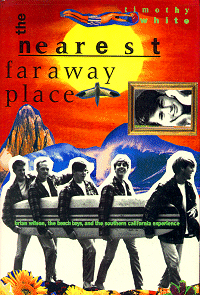
The
Nearest Faraway Place:
Brian Wilson, The Beach
Boys and the Southern
California Experience Timothy
White, 1994; Henry Holt
and Company, 416 p.
"Well, that's
it. That's the
song." Brian shut
off the organ and sat
back, relieved but
expectant. As he
dabbed his forehead with
his damp shirt sleeve,
he kept sneaking looks
at his visitor.
"Do you like . . . I
dunno--do you like
the song?" he finally
wondered aloud, his
voice loud and
squeaky. The total
exhaustion is his
featues was
chilling. If a man
could wash his face in
fear, as if it were some
milky, implacable
liquid, surely this was
the way it would
emerge. He
overwhelmed those who
came close to him with
the sensation they were
meeting a man with a
broken heart." [pg.
295]
I enjoy a
good, scholarly read now
and then, but this book
was overwhelming.
Not merely a biography
of the Beach Boys, but a
historic placement of
them in Americana.
He begins by relating
the history of
California, blends in
the family lineage and
western exodus of the
Wilson family, relates
topical information such
as the origins of
surfing, and post-war
nuclear families.
In brief, Mr.
White tries to
understand and define
the magic and success of
the Beach Boys by
placing them in a
historical
context. Well and
good, but it's TOO
MUCH! I found
myself skipping entire
chapters in my search
for the Beach Boys.
Perhaps
in my heart of hearts I
don't believe the Beach
Boys to be worthy of
such an in-depth
panorama as Timothy
White serves up, and
there is no denying that
Mr. White is a supremely
talented and
knowledgable writer, but
only the most ardent fan
with a burning love of
history and trivia will
be able to wade through
this
behemoth.
Not for the casual
reader. Another
review of this book may
be read by clicking here.
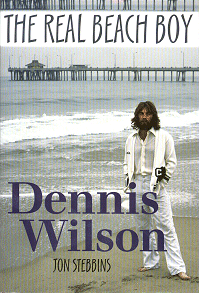
The Real
Beach Boy: Dennis Wilson Jon
Stebbins, 2000;
ECW Press, 185 p.
"Another
theory about [Brian's]
trouble centers on his
charismatic brother, and
this theory would help
to explain Brian's
attitude towards
Dennis. There are
some who believe it was
Dennis who inadvertently
nudged Brian over the
precipice. "I
think Dennis was very
much responsible for
Brian's breakdown," says
filmaker/photographer Ed
Roach, . . . "Brian
couldn't stand that
Dennis got all the
attention. Dennis
got the adulation, and
that's what drove Brian
away from the
stage. Brian was
so much less appreciated
on stage, and he really
resented Dennis for it."
[page 55]
Dennis Wilson
undoubtedly deserves a
well-researched,
objective biography that
strips away the myth
surrounding his life and
personality and
illuminates his
undeniable gifts and
talents, while
dispassionately
chronicling his serious
weaknesses. This
is not that book.
In the introduction, Jon
Stebbins favorably
compares himself with
Dennis during a brief
meeting they had in
1978, and that explains
much of the bias that
you read in this
unevenly researched
book. Not merely
content to heap
adulations upon Dennis,
the author feels a need
to downplay, or even
denegrate the other
Beach Boys in the
process. He
flip-flops between
praising and damning
Brian for overshadowing,
even putting down his
younger brother's
talents, and credits
Dennis for much of the
Beach Boys appeal,
narrowly sidestepping an
outright statement of
his belief that without
Dennis, the Beach Boys
would have been a
flash-in-the-pan.
Such apparent bias makes
this book tedious
reading indeed. In
fact, from reading the
opening thank-you's, I'd
have imagined that Mr.
Stebbins would have much
more first-hand accounts
to draw from in painting
an accurate portrait of
Dennis, but most of the
book is his own stale
recounting of well-known
facts, with the
occasional "startling
revelation" thrown in
for sheer effect (see
the quote above), which
leads me to believe that
most of the people he
spoke to either didn't
cooperate with him, or
he merely disregarded
their opinions in favor
of his own. In its
way, this book is as
damaging as Brian's Wouldn't It Be Nice,
and its statements
should be taken with a
grain of salt. Included
throughout the book are
a good selection of
photographs that should
be very welcome to fans
indeed.
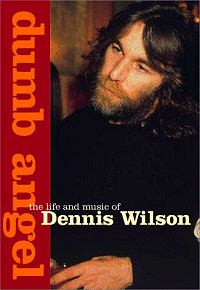
Dumb
Angel: the life and
music of Dennis Wilson
Adam
Webb, 2001;
Creation Books, 189 p.
"Though it
might have made the
great momentarily
greater, the psychedelic
revolution also
propelled the bandwagon
jumpers and the
hangers-on to the front
of the queue.
Expanding the minds of
the mindless, bad ideas
became worse and pop
started to resemble a
vacuum of ideas with
long hair. Major
labels assimilated the
language of the Haight
to score hits.
Pills down the throats
of the talentless only
increased the volume of
voices until everyone
was lost in [the] Tower
of Babel. For the
rest of the decade it
was pretty much downhill
without anyone
suficiently advanced
muscially to pick up the
baton. Somehow
from the eggs of
expectation emerged ugly
hatchlings . . . [page
44].
"Dumb Angel"
is the second book about
Dennis Wilson to be
released within a year,
and it plows much of the
same turf as its
predecessor, but with
its focus on Dennis'
composing and producing
talents. I often
felt while reading that
Mr. Webb was padding his
writing, with diatribes
against the music
business, long,
sometimes awkward
metaphors (eggs of
expectation?) and enough
glaring typos to
permanently discredit
Creation Books editorial
staff. The author
manages to keep a
balanced perspective,
which is a plus, and his
writing, while
disjointed and
occasionally preachy, is
always passionate.
This does not always
make for good
writing. Little is
documented, much is
generalized, numerous
paragraphs are simply
rehashing familiar
ground, and wide swaths
of Dennis' life are
unexamined. The
high points include
documenting Dennis's
flowering as a composer
in the post "Pet Sounds"
era, giving a few
detailed accounts of
recording sessions, and
an appendix of valuable
interviews with Dennis'
intimate associates,
including Steve
Kalinich, John Hanlon,
and Carli
Munoz. Black
and white photographs
are inserted throughout
the text. Overall,
a flabby, partially
illuminating portrait of
Dennis Wilson.
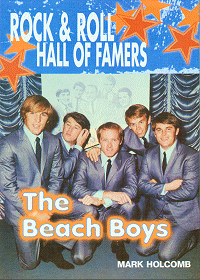
The
Beach Boys (Rock and
Roll Hall of Famers)
Mark
Holcomb, 2003; Rosen
Publishing, 112 p.
"When you
think of the Beach Boys,
chances are you picture
surfboards, hot rods,
and the warm beaches of
sunny southern
California. What
you may not know is that
behind the group's
fun-loving image and
carefree songs are years
of hard work, career ups
and down, and personal
tragedy. The Beach
Boys are, in both their
lives and music, more
complicated than they
first appear." [pg. 5]
Here's a
unique entry in the
Beach Boys literary
canon: a children's
book! Written for
libraries and aimed at
youngsters age 10-15,
this book aims to tell
the life story of the
Beach Boys, triumphs,
failures and all, in
just over one hundred
pages, and it succeeds
remarkably well,
although the writing is
a little 'dry' -- a
result of having to cram
so much information into
such a short book.
Usually you see these
kind of biographies for
new "hot" artists of the
moment, (Britney who?)
but Rosen Publishing has
decided to dig a little
further back and explore
bands and artists who
have been entered into
the Rock
and Roll Hall of Fame.
Not
a bad idea, and a fine
book too, if you have a
child who would like to
know more about The
Beach Boys but is
perhaps a little young
to be exposed to all of
the drug use, lawsuits
and other "colorful"
events that have marked
the band members
lives. The author
has carefully chosen the
most pertinent events in
the Beach Boys' career,
from their youth clear
up until 2001, which
makes this the most
complete biography of
the band in print.
Each chapter is
accompanied by
appropriate photographs,
both black & white
and color, and includes
short sidebars which dig
a little deeper into
certain people and
events. Includes
bibliographical
references (p. 107-108),
a brief discography, and
index. So go ahead
-- start indoctrinating
the next generation of
Beach Boys fans!
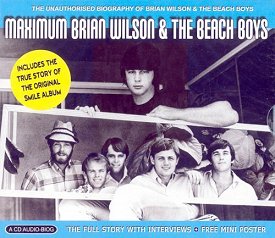
Maximum
Brian
Wilson and The Beach Boys Chrome
Dreams ABCD196
[AudioBook]; Released
November 15, 2005
Chapters:
1. Introduction:
The Perfect Wave
2. Everybody's
Learning How
3. Sound of
California
4. Today!
5. Greatest Album
Ever Made
6. Greates Album
Never Made
7. Nothing Doing
8. Band of
Brothers
9. Stranded on the
Beach
10. Doctor Will
See You Now
11. Return of the
Dumb Angel
12. Made for These
Times
REVIEW: Touting
itself
as "the first audiobook on
the Beach Boys" Chrome
Dreams publishers
specialize in releasing
scores of "unauthorized"
biographies, all of which
seem to be labelled
"maximum", although by
listening to the finished
product, I'm tempted to test
international waters for
truth-in-advertizing laws,
since it seems the bare
minimum of research went
into this threadbare
production. Read
by the dry-as-dust Sian
Jones, whose broad
British accent lends an air,
not of sophistication, but
rather Monty Python irony to
the performance.
Highlighting the narration
are brief musical snippets
which attempt to mimic the
Beach Boys sound, without
actually treading on any
actual songs of the
band. Also peppered
throughout the narration are
low-fidelity snippets of an
interview with Brian Wilson
which seems to have been
recorded off of a poor
telephone connection, and
which
unfortunately totals
perhaps two minutes.
The audiobook itself veers
between dull recitation of
facts, such as the name of
the Beach Boys first label,
first song, names of
relatives, and a snobbish,
highbrow disregard for the
Beach Boys sound and
accomplishments. The
running time is just over
fifty-five minutes, although
it feels much, much longer,
with loads of cliche
phrases, well-worn facts,
and the interminable
narration, which tends to
drone on in the worst
documentary style. The
text (written by Tim
Footman) tries hard to be
even-handed, but its clear
that the producers wished to
include nods to the darkest
moments of Brian's psyche,
and often stoop to
tabloid-like phrases to
create a sensationalistic
portrait. In short,
this audiobook contains
several recitations of dry
facts, somewhat lurching
narration, a scant few
late-period quotations from
Brian Wilson, and the
overarching whiff of
exploitation.
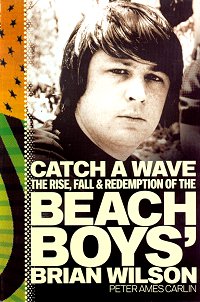
Catch A Wave: The
Rise, Fall, and Redemption
of the Beach Boys' Brian
Wilson
Peter
Ames Carlin; Rodale Books,
336 p., Released July 25,
2006
"...
[Mark Linnett]
can walk to a
filing cabinet
and pull out
something he
knows is going
to blow your
mind. It
is a dark
metal
container
about the size
of a small
pizza box,
only thicker,
and he lays it
gently in my
hands.
"You're gonna
want to hold
that," he
says.
"Those are
master tapes
from the
original Smile
sessions."
...I feel the
weight of it
in my palms
while the
wheels in my
brain spin,
trying to
factor this
moment into
the years
Smile has
lived in my
mind.
It's wonderful
to hold
something so
historical and
mysterious.
But at the
same time, I
also realize
that something
important is
changing for
me. In
all these
years of
thinking
about,
mourning the
loss of,
returning
obsessively to
the fragments
from, and
pondering the
overarching
meaning of the
legacy of
Smile, I'd
never thought
of it as
something that
could exist in
the physical
sphere I
inhabit.
But now I'm
holding a part
of it in my
hands,
standing on
the very spot
where Brian is
breathing life
into the
finished
recording.
And how am I
supposed to
feel about
that?"
[pg.
308-309]
REVIEW: Overviews
of
the Beach Boys lives
and accomplishments are
nothing new - there
have been a plethora of
biographies, and even
Brian's mostly
ghost-written
'autobiography', which
have attempted to
throw a dim light on the
staggeringly complex
intertwinings of
the band members
troubled
relationships. But
few biographies have
really done it well.
But now comes along Peter
Carlin's fine Catch
A
Wave, and
even including David
Leaf's seminal book above,
this one strikes me as the
best biography of Brian
and the Beach Boys to see
the light of day.
Its success lies mostly in
the author's clear,
intuitive grasp of what
makes Brian Wilson tick -
the subtle nuances he's
able to discern by
observation and intuition;
the spot-on questions he
asks, and is able to
provide astute answers
for; and his finely-honed
writing style, which is
thoughtful, brief, and
easy. I had assumed
from previous reports that
Catch A Wave was
going to be mostly
concerned with the
emergence of Brian's new
production of the
long-dead Smile
project; but happily, Mr.
Carlin has decided to give
a full account of the
Beach Boys lives and
works, and although not
exhaustive, he provides
much-needed clarity on the
forces that have shaped
both Brian, and the rest
of the Beach Boys.
Much of the material here
will be familiar to
long-time fans, but much
is also new - from
one-on-one access to Brian
and most of the surviving
members of the band (Bruce
Johnston being the only
one who declined a
personal sit-down
interview, instead
providing details through
e-mail exchanges); to
access to rare taped
rehearsals of the
fledgling band; and
hitherto unpublished
accounts of personal
details which should have
curious fans salivating
for more. The author
also delves into The Beach
Boys albums, giving
personal reviews and
history which, although
subjective, are fun to
read. Of course, the
real hook of this book is
the final chapters, which
delve into the struggle
Brian had in bringing
Smile to life again, and
although not many of the
details are new, I got
tingles when reading
Carlin's account of the
dark demons which Brian
had to overcome in order
to make Smile a
reality. This is a
great book, possibly the
most illuminating
biography on the Beach
Boys yet, and highly
recommended reading for
all Beach Boys fans.
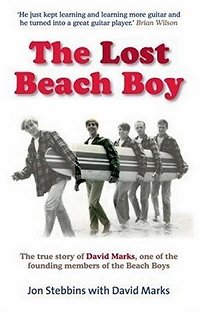
The Lost Beach
Boy: The True
Story of David Marks one
of the founding members
of the Beach Boys
John
Stebbins
with David
Marks;
Virgin Books, 288 p.,
Released May 29, 2007
"Between
gigs, David
was having a
terrible time
adhering to
the rigours of
school.
He was
contantly
courting
trouble by
experimenting
with cutting
class, petty
theft,
vandalism,
smoking,
drinking, and
generally
screwing up.
He was a
rock star,
after all.
In a
way, he was
just keeping
his chops up.
And much
of the time,
trouble found
him whether he
was looking
for it or not.
'I was
getting into a
lot of
fights,' says
David.
Throngs
of jealous
teen guys
would
sarcastically
tease David
with the
exaggeratedly
punctuated
gibe 'Beeeech
Boy'.
For a
skinny
fourteen-year-old
boy, being a
famous Beach
Boy could be
like having a
flashing
target pasted
on your head.
No
longer able to
cope with life
as major
celebrities in
a public
school
environment,
Carl and David
made plans to
attend
Hollywood
Professional
School.
Among
their
classmates
were Marilyn
and Diane
Rovell,
musician Eddy
Medora and
actresses
Peggy Lipton,
Ann Marshall
and Sue Lyon."
[pg. 65]
REVIEW:
I had
big problems
with Jon
Stebbins'
earlier book
about Dennis
Wilson, due to
the author's
penchant for
inserting himself into
the
narrative;
and that same
problem crops up
in this, his
second foray
into Beach
Boy-dom in this
starry-eyed
biography, which
the author has
co-written with
his subject, the
perpetually
sidelined David
Marks. But
whereas the
previous
biography was
almost
unreadable due
to the
transparent
biases of the
author, this one
is stronger, due
in great part to
having
David
Marks on hand to
provide personal
anecdotes and
stories which
have not shown
up in any other
published works
about the Beach
Boys. The
best biographies
are thorough -
but this one
gives only
glimpses of
David's
fractured, oddly
spiritualistic
family life, and
glosses over any
deep formative
influences in
David's youth.
Instead,
Mr. Stebbins
takes the same
skewed approach
he took with
Dennis Wilson -
that without
David Marks, the
Beach Boys
wouldn't have
been the
genre-shaking
success that
they were
- giving
Olympian weight
to the
occasional
rhythm guitar
licks which
David played on
record, and even
crassly hinting
that "Good
Vibrations" was
the direct
result of David
loaning Brian
some marijuana
one day.
The author
takes great
delight in
taking pot-shots
at all the Beach
Boys, and
gleefully
repeating the
several
distasteful,
sordid tales
which David
Marks is happy
to relate.
But
despite the
author's best
efforts, it's
pretty clear
that David has
led a
self-destructive
life, with
drugs, failed
bands, failed
relationships,
and a life-long
disdain for
authority which
eventually left
David wandering
the streets,
barefoot, half
clothed, and
without a car.
And
despite David's
own professed
penchant for
leaving the
Beach Boys and
their fame
behind him, it's
clear that the
association with
his former
band-mates is
the lingering
echo in his
life; the author
recounts
numerous run-ins
with the Beach
Boys which David
has had, and
each event seems
to be a
benchmark in
David's fade
from the public
eye. In fact,
for a book
that's meant to
be about David's
life, the author
spends over half
of the book
detailing
Marks's time
with The Beach
Boys, and
recounts in
detail every
subsequent
encounter.
That
doesn't leave a
lot of space for
his other
endeavors, and
the final third
of the book
bounces back and
forth between
recounting
David's
alcoholism, failed
relationships,
the occasional
recording
session, and
then has the
temerity to tack
on a blatantly
forced
"feel-good"
ending which again
plays on the
subject's Beach
Boys connection.
The
writing itself
is heavy
with clichés, and
the strengths of
the book rest
solely on having
Marks's
first-hand
accounts. The
title of the
book
is apropos,
since without The
Beach Boys,
David
Marks, and
the raison d'etre for
this book, would
be lost.
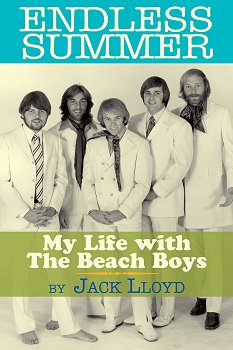
Endless Summer: My
Life With The Beach
Boys by
Jack Lloyd
BearManor Media, 238
p.;
Released July 26,
2010
When
the Maharishi
and I finally
kicked around
our
philosophical
differences, and
I went up front
to where
everyone else
was sitting,
Carl Wilson said
to me, "You
can't talk that
way to him.
It's
disrespectful."
I said,
"I wasn't being
disrespectful at
all. We
were just having
an intellectual
discussion."
"Well, all the
same, you
shouldn't talk
that way."
"Carl," I said,
"the man is just
a man.
He's a
bright man and
he's got
something to
sell. He's a
pitchman, with a
very good pitch.
I respect
him for his
honesty, but
he's not god."
Actually, I was
going to finish
the conversation
with, "I am,"
but decided
against it
because Carl did
not really have
a very swift
sense of humor. [pg 125]
REVIEW:Another book
by another "insider" -
Jack Lloyd's Endless
Summer: My Life
with The Beach
Boys is
readable, but filled
with so much
behind-the-scenes
business deals and
sleazy recounting of
bedroom antics that I
found it a dire
experience.
Hired by Irving
Granz to run the Beach
Boys concerts (selling
programs, counting the
box office, and
eventually doing
promotional work), the
author spends a great
amount of time talking
about the shady
dealings behind the
scenes, which included
a lot of graft, a lot
of theft, and a lot of
favors. Not only
does he talk about The
Beach Boys, but other
acts that Granz handed
him, including Sonny
and Cher, The Pickle
Brothers, and Paul
Revere and the
Raiders, to name but a
few. Fresh out
of college, Lloyd
learns the business
from the ground up,
and although he mostly
paints himself with a
virtuous brush, he has
no qualms about
showing the seamier
side of show biz -
with multiple lurid
accounts of
after-concert drunken
orgies, drug use,
stupid pranks, and
irresponsible
behavior, so that
anyone who reads this
will likely have any
pre-conceptions about
the personal lives of
the Beach Boys
irrevocably shattered.
No one is spared
- Carl, Alan, Mike,
Bruce and Dennis all
have their exploits
splashed over the
pages, and Lloyd veers
wildly between dry
recounting of
contracts, money
disputes, graft, and
white collar theft and
sad, turgid scenes of
young girls constantly
prostituting
themselves for the
band and other
hangers-on. And
despite the author's
claim in the
introduction that he
limited both the foul
language and the
scenes of sexual
escapades, this is a very
R-rated book.
Since the
author's time with the
band was during the
late 1960s, there are
brief mentions of both
the Maharishi and
Charles Manson, but
because Lloyd was
primarily a business
associate, his
meetings with both
were brief, and add
little to the canon of
knowledge. Most
comparable to Steven
Gaines' seamy Heroes
and Villains,
Endless
Summer tries
hard to balance dry
business facts with
bedroom sleaze, and
generally succeeds -
unfortunately, it all
left me with a bad
taste in my mouth, and
a little less respect
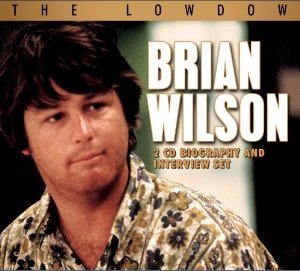
for The Beach Boys. Brian Wilson:
The Lowdown
Sexy Intellectual
[AUDIO BOOK]
Released August 29,
2011
Disc:
1
1.
Humour/Science/Art
2. Genius
3. Pocket Symphony
4. One Sound Out
of Two
5. Being Brian
Wilson
6. Health Nut
7. Spector &
The Beatles
8. Highs &
Lows
9. Smiley Smile
Disc:
2
1. Introduction:
the Perfect
Wave
2. Everybody's
Learning How
3. The Sound of
California
4. Today!
5. The Greatest
Album Ever Made
6. The Greatest
Album Never
Made
7. Nothing Doing
8. Band of
Brothers
9. Stranded On the
Beach
10. The Doctor
Will See You Now
11. Return of the
Dumb Angel
12. Made For These
Times
REVIEW:
The
packaging
of this
audiobook is a
little
deceiving; for
housed within
the cardboard
box are two
separate CD's,
the first being
the
previously-released
Maximum
Brian Wilson
& The
Beach Boys
(reviewed
above), and the
second being a
separate disc: Brian
Wilson: The Interview
- which is in
itself a
deceptive title,
since it's not
ONE interview,
but several, all
sort of
haphazardly
sequenced in no
discernable
order. And
since this is a
borderline
bootleg
recording, there
are no sources
for the
interview
segments.
The first two
interviews are
the lengthiest,
clocking in at
over 10 minutes
each, with the
other segments
clocking in
anywhere from
eight to a mere
two
minutes.
The entire album
runs just over
sixty minutes,
and might be
worth a listen
once or twice,
but Brian, even
at his most
articulate, is
sometimes barely
coherent - he
rambles on about
great Thai food;
discusses how
intense his
father's
spankings were;
touches on the
genesis of "Good
Vibrations" -
talks about
health food; but
for long-time
fans, there's
little truly
revelatory here
- and Brian is
so stream of
consciousness in
his speech,
jumping from one
idea to another
with little
rhyme or
reason. At
times he seems
rattled - his
2005 interview
promoting his
Christmas album
has the
interviewer
making him sound
like a
performing dog,
singing snippets
of Christmas
carols on
demand.
Some fans would
say this is a
sign of his
genius, I tend
to think that
it's more a
result of his
prolonged drug
abuse, (which he
also discusses
at length, and
often defends) -
and it can make
for a spotty
listening
experience.
Neither
enlightening nor
greatly
entertaining,
this set can be
viewed for what
it is; a quick,
cheap release by
a cheap, shady
company.
Surfboards,
Stratocasters, Striped
Shirts: The Beach Boys
on Tour 1966 - A Photo
Journal
By Bill
Yerkes; foreword by
Bruce Johnston
Surf Chase
Publishing, 160p.
Published 2012
“Do you
ever wonder why
bar bands that
cover classic
rock tunes from
the ‘50s, ‘60s
and ‘70s almost
never do any
Beach Boys’
tunes?
It’s because
they
can’t.
The Beach Boys’
music is just to
difficult to
play and sing
for the average
gigging
musician.
From the
beginning, The
Beach Boys were
different.
First, they were
a surf
band. They
didn’t plan it
that say and the
term didn’t even
exist when the
music we would
later hear
termed as “surf
music” was being
played at
teenage dances
all over
Southern
California by
groups such as
The Bel-Aires or
Dick Dale and
the Del
Tones. The
Beach Boys added
lyrics to surf
music and
created a whole
new genre. Although
The Beach Boys
would take the
California beach
surf lifestyle
to the rest of
the world, at
home, the hard
core surfers
were not their
biggest fans.” [from
the
introduction]
REVIEW: This
self-published book by
Bill Yerkes, long-time
surf-hound and Beach
Boys aficionado, is a
wonderful gift for fans
of the Beach Boys.
Essentially chronicling
four concerts from 1966,
beginning April 29th at
Cornell University,
Ithaca, New York, and
continuing to a July
23rd Asbury Park, New
Jersey date, followed by
a July 30th Atlantic
City, New Jersey show,
and finally a November
22nd return to Ithaca at
Ithaca College, this
book is literally a
“snapshot” of a pivotal
moment in Beach Boys
history. With a few
pages of text
interspersed between the
large, glossy
black-and-white
photographs of
behind-the-scenes and
on-stage moments, the
author details how he
and his roommate snuck
into the backstage of
the concert, and his
first meeting with Bruce
Johnston, followed by
the rest of the band, on
the eve of the release
of Pet Sounds. Carl talks up
the release, claiming it
is far better than Summer Days (the author’s
then-favorite album),
and the author remembers
the night with
remarkably clear
hindsight. Luckily, he
took his 35mm camera
with him, and documented
several close-up, candid
moments of the band
rehearsing and lounging
around, and later, in
performance. At the next
concert, the Beach Boys
are dismayed to discover
that DJ’s in the city
haven’t been playing the
“A”-side of Pet Sounds first single,
“God Only Knows” (over
concern of the word
“God” in the title) and
are instead flipping the
disc to the “B”-side
“Wouldn’t It Be Nice”
which the band has never
played live before.
Quickly, the band throws
together a concert
version of the song
backstage, and inserts
it in the set list right
after “Sloop John B” all
of which is
photo-chronicled by Mr.
Yerkes. The author also
documents Dennis’s first
stabs on the piano of
what would eventually
become “Forever,” and
later snaps what would
be one of the Beach Boys
last performances in
their striped shirts,
shortly before the
release of “Good
Vibrations.” The book’s
presentation is very
simple, heartfelt, and
genuine - a rare thing
for a fan publication,
but the author is wise
enough to keep his words
to a minimum and let the
photographs do most of
the talking. A very nice
addition to the Beach
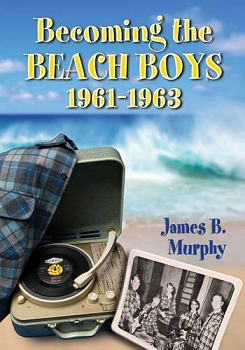
Boys library. Becoming the
Beach Boys 1961-1963 By
James B. Murphy
McFarland
Publishing, 436p.
Published June 8,
2015
DESCRIPTION:
They were almost
The
Pendletones--after
the Pendleton
wool shirts
favored on
chilly nights at
the beach--then
The Surfers,
before being
named The Beach
Boys. But what
separated them
from every other
teenage garage
band with no
musical
training? They
had raw talent,
persistence and
a wellspring of
creativity that
launched them on
a legendary
career now in
its sixth
decade.
Following the
musical vision
of Brian Wilson,
the Beach Boys
blended ethereal
vocal harmonies,
searing electric
guitars and lush
arrangements
into one of the
most distinctive
sounds in the
history of
popular music.
Drawing on
original
interviews and
newly uncovered
documents, this
book untangles
the band's
convoluted early
history and
tells the story
of how five boys
from California
formed America's
greatest rock
'n' roll band.
REVIEW:
Author James B.
Murphy has done a
brave, and difficult
thing in writing
what, is essentially
a densely-packed
microcosmic look at
the formative forces
that created "The
Beach Boys".
Echoing Timothy
White's similarly
dense, but
wider-ranging The
Nearest
Faraway
Place,
which traced The
Beach Boys within
the scope of
California history
and mythos, Becoming
The Beach Boys
1961-1963
takes
a much narrower view,
examining social,
economic, cultural and
familial tidal forces
which helped shape the
the band's work ethic,
musical approach, and
ambition. What's
truly impressive about
this book is how much
detail Dr. Murphy has
included - everything
from interviews and
newly-discovered
documents trace how an
essentially untrained
group of musicians,
raw and undeveloped,
wrote, played and sang
their way from a local
hit single on an
independent label,
into a
nationally-recognized
phenomenon, all within
the space of just a
few months. He
delves into recording
label practices of the
time, which allowed
for young artists to
be discovered,
developed, and
nurtured past what
might only have been a
flash-in-the-pan
"one-hit
wonder". But for
all the swirling
detail that's packed
into this
four-hundred-plus
book, the author
impressively never
loses sight of the
human struggle at it's
core; all of the
fears, hopes, and
insecurities of the
band are laid bare -
along with their
amazement of how
everything broke their
way. This is an
important book for
Beach Boys fans; it
chronicles the band's
quintessential reality
of the American Dream,
which in turn became
part of the American
story.
Personally, I would be
very interested in
seeing a sequel or two
which looks at later
milestones in the
band's career.
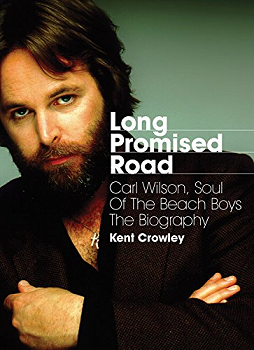
Absolutely essential. Long Promised
Road: Carl Wilson,
Soul of the Beach Boys
- The Biography By
Kent Crowley
Jawbone Press,
288p.
Published October
12, 2015
DESCRIPTION:
No life in
popular music
touched on as
many major
musical
milestones as
that of The
Beach Boys' Carl
Wilson. While he
is often
unjustly
overlooked as a
mere adjunct to
his more famous
brothers Brian
and Dennis, Carl
was a major
international
rock star from
his early
teens. The
proud owner of
one of the
greatest voices
in popular
music--one that
graced some of
the most
important
records of the
pop era,
including 'God
Only Knows' and
'Good
Vibrations'--Wilson
was also one of
the first
musicians to
bring the
electric guitar
to the forefront
of rock'n'roll.
His musical
skills provided
The Beach Boys'
entree into the
music business,
from which he
then stewarded
their onstage
journey through
the ups and
downs of the 60s
to their
comeback in the
70s and into the
role of
'America's band'
in the 80s.
Along the way,
Carl quietly
endured his own
battles with
obesity,
divorce,
substance abuse,
and ultimately
terminal cancer,
all the while
working to
protect his
family's
business and
legacy. This
major new
biography
reveals the true
story of modern
rock'n'roll,
lived from the
center of the
most important
decades of
popular music.
REVIEW:
For fans of Carl Wilson
who have been hoping
that a closer, more
intimate look at his
life and valuable
contributions to The
Beach Boys has arrived -
they'll have to wait a
while longer. Long Promised
Road
by author Kent Crowley
makes the unpardonable
error of fooling buyers
into thinking this book
is an in-depth look at
Carl Wilson, but
instead, its merely a
rehash of well-trodden
Beach Boys lore,
reducing it's main
subject, Carl, to a
side-player in his own
life story. While
lauding Carl's voice and
guitar work, not to
mention his important
ascent to leader of the
Beach Boys following
Brian's slow descent
into depression, the
author doesn't seem to
have had access to any
primary sources for his
narrative, eschewing
interviews with any
people close to Carl,
and instead culling
information from other
biographies and articles
- little of which throws
any new light on its
subject. The only
real new threads are
oddly sympathetic
portraits of Murray
Wilson, whose efforts to
promote the band early
on are lauded, and a
speculative
interpretation of Jimi
Hendrix's Monterey Pop
Festival comment that
"Surf music is
dead." In the
absence of any close
primary sources (his
children? His
marriages?
His bandmates?) Crowley
instead leans on
conjecture and
speculation for many of
his conclusions.
In short, if you're
looking for an
illuminating biography
of Carl Wilson, this
ain't it. The Beach
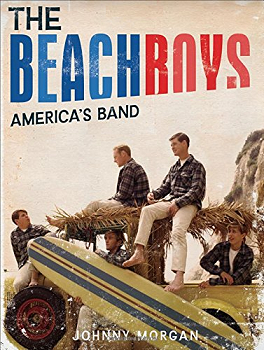
Boys: America's Band By
Johnny Morgan
Sterling Press,
256p.
Published October
27, 2015
DESCRIPTION:
The Beach Boys
pioneered the
wildly popular
"Surf Sound,"
selling more
records than any
other American
band. And 2016
marks the 50th
anniversary of
their
groundbreaking
and hugely
influential
album Pet Sounds
and its
follow-up
single, "Good
Vibrations."
This book offers
the first fully
illustrated,
in-depth
examination of
the group's
story, with a
special emphasis
on the creation
of those two
masterpieces and
what came after.
More than 150
images include
classic and
rarely published
photographs,
album artwork,
and archive
memorabilia. By
examining the
writing,
recording and
performance of
the band's
entire
catalogue, the
book presents a
unique look at
the making of
the Beach Boys,
both before and
after their 1966
triumphs.
REVIEW:
Johnny Morgan, a
London-based author,
editor, and journalist,
whose previous
publications have all
been about music and
graphic art, including The
Greatest
Album Covers Of
All Time
and The
Art of the LP:
Classic Album
Covers 1955–-1995
has carried his love of
design over to this
handsome,
coffee-table-sized book,
reminiscent of DK
Publishing's many
graphic-intense
publications, which
marries a competent
history/biography of The
Beach Boys with a
plethora of
illustrations to help
carry the
narrative. The
Beach Boys:
America's Band
is a colorful, panoramic
overview of the Beach
Boys lives and career;
wisely laid out in
chronological format,
it's eight chapters
begin with the births of
the band (1942-1961) and
concludes with the most
recent year, 2015.
Biographical events are
highlighted by numerous
sidebars with charting
singles and album
information, along with
high-lighted quotes by
band members, pictures
of studio sessions with
such alum as Glen
Campbell, Van Dyke Parks
and the Wrecking Crew,
information on select
concerts, and brief
comments on The Beach
Boys music and its
importance. Rare
concert photographs,
color reproductions of
posters, singles, and
albums, and lots more is
all gorgeously mounted
and easily
navigated. Nothing
here is particularly
ground-breaking or
revelatory, but it's all
presented with such
class that everyone
should find some
pleasure in the wealth
of images and factoids
presented in such a
clean, attractive style. Good
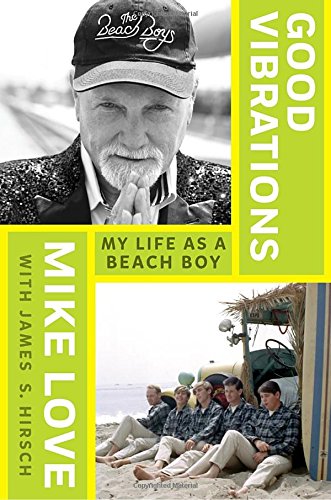
Vibrations: My Life As
A Beach Boy By Mike
Love with James S.
Hirsch
Blue Rider Press,
436p.
Published September
13, 2016
Mike
Love is a
founding member
of The Beach
Boys, considered
to be the most
popular American
band in history,
with 13 Gold
Albums, 55
top-100 singles,
and four #1
hits. Love has
been the lead
singer of the
group one of its
principal
lyricists since
its inception in
1961. His
credits include
such pop
classics as
"Good
Vibrations,"
"California
Girls," "I Get
Around," "Fun
Fun Fun," and
"Kokomo." Love
has received an
Ella Award for
his song
writing, and, as
part of The
Beach Boys, he
is a member of
Rock and Roll
Hall of Fame;
the Vocal Group
Hall of Fame;
and has received
a Grammy
Lifetime
Achievement
Award. James S.
Hirsch is
a journalist and
New York Times
bestselling
author whose
books include
biographies of
Willie Mays and
Rubin
"Hurricane"
Carter and
examinations of
military issues,
the health care
system, and
global
philanthropy.
Hirsch won the
Christopher
Award for Walk
in Their Shoes:
Can One Person
Change the
World.
REVIEW: No
one has ever accused
Mike Love of being
self-reflective, so,
an autobiography from
the most controversial
of the founding
members of the Beach
Boys is almost a
contradiction of
terms. For those
hoping for personal
insight into the man,
look elsewhere - this
book serves one
purpose - to recast
himself and his legacy
as the driving force
of The Beach Boys, all
while painting each of
the other members in a
less-than-flattering
light.
Alternately defensive,
hagiographic, and
credulous, Mike whisks
readers past his
family life and
upbringing to dive
almost immediately
into what he really
wants to discuss - his
own talent, and his
white-knuckle
relationships with
almost everyone else -
especially
Dennis. He
pointedly tackles
long-standing rumors
about him (the
oft-quoted "Don't f***
with the formula"
quote? - he never said
it. His Hall of
Fame rant against The
Rolling Stones?
He hadn't had time to
meditate that day.)
Essentially, he spends
a great deal of ink
excusing or justifying
his actions with
little sign of honest
regret or repentance,
for every
mean-spirited, hateful
thing he's ever done
or been accused
of. While he
tacitly acknowledges
his failures as a
husband and father,
and lightly brushes
over his many
infidelities and drug
uses, he's less
forgiving of other's
faults - and freely
rakes everyone from
former managers,
lyricists, business
associates and The
Beach Boys over the
coals for their
slights and sins, all
while putting a
gentlemanly
"lighthearted" gloss
on everything to keep
himself from looking
too small. Long,
excruciating passages
about board meetings
and lawsuits drag the
narrative down, but
for long-time fans,
that has been The
Beach Boys experience
- and Mike Love has
been the driving force
behind the lawsuits
and business deals for
the past four decades,
so yeah, that's what
you're going to
get. The writing
style is very dry,
with the seams between
Mike's quotes and
James S. Hirsch's dull
recitation of
Wikipedia-style
factoids starkly
evident. It
makes for an arid and
depressing reading
experience - one which
I was glad to get to
the end of.
i am
Brian Wilson: a
memoir
By
Brian Wilson
with Ben
Greenman
Da Capo Press;
312 p.
Released October
11, 2016
They
say there are
no second acts
in American
lives, and
third acts are
almost unheard
of. That’s
part of what
makes Brian
Wilson’s story
so
astonishing.
As a
cofounding
member of the
Beach Boys in
the 1960s,
Wilson created
some of the
most
groundbreaking
and timeless
popular music
ever recorded.
With intricate
harmonies,
symphonic
structures,
and wide-eyed
lyrics that
explored
life’s most
transcendent
joys and
deepest
sorrows, songs
like “In My
Room,” “God
Only Knows,”
and “Good
Vibrations”
forever
expanded the
possibilities
of pop
songwriting.
Derailed in
the 1970s by
mental
illness, drug
use, and the
shifting
fortunes of
the band,
Wilson came
back again and
again over the
next few
decades,
surviving
and—finally—thriving.
REVIEW: So,
here it is, released
barely a month after
Mike Love's own
autobiography,
Brian's second
autobiography (after
the heavily
Landy-influenced Wouldn't
It Be Nice),
is a startlingly
different affair
from his former
book. For
anyone to imagine
that Brian Wilson,
who is famed for his
terse, monosyllabic
interviews, could
ever manage to
wrangle enough
sentences to fill a
300-page book is
enough to strain all
credulity, but
unlike Mike's bio, i am Brian Wilson: a memoir, actually
reads like Brian
Wilson is
speaking. For
one thing, it's
non-linear;
beginning from
2004's historic
first Smile
concert in London,
and jumping
backwards and
forwards throughout,
the book keeps the
reader on their toes
- it reads almost
like stream-of-
consciousness
writing, with one
experience leading
to earlier memories,
and then to another
memory - but
constantly moving
forward - from his
earliest childhood
memories at home, to
his most recent
concert tour of Pet
Sounds, Brian lays
all of his fears,
doubts, troubles,
and triumphs on the
table. In
doing so, he reveals
what most of us
knew, at least
distantly - that
Brian struggles with
mental illness, but
continues on,
regardless. He
shows a deep
understanding of
human nature -
including his
band-mates, family
members, and
business
partners. Is
everything we're
reading true?
It's hard to know,
as Brian has changed
and embellished
facts of his life
before - but it
reads as a very
honest, open
examination of his
life. And
additionally, it
sheds a great deal
of light on his
latter-day revival -
post-Landy: he
discusses each of
his albums and how
they came about, how
he feels about them,
and how he's dealt
with seeing his own
life portrayed on
screen, most
recently in the
stunning Love
& Mercy
biography. For
fans, it's an
extraordinarily
illuminating read,
and although you
might be left
wanting more, it's
the most naked
portrait of Brian
Wilson we're likely
ever to see.
The
Beach Boys
By
The Beach Boys
Genesis
Publications
Released April
2, 2024
Their
only official
book, The
Beach Boys by
The Beach Boys
is the
ultimate
chronicle of
one of the
world’s
greatest
bands. Through
their unique
sound, complex
harmonies,
sensational
live shows and
use of
innovative
recording
techniques,
The Beach Boys
became woven
into the
cultural
fabric of
America and
influenced
generations of
musicians
globally. This
book documents
how it
happened.
Expanding the
narrative are
a host of
contributors
who have been
involved with
or inspired by
the band's
music,
including
Peter Blake,
Lindsey
Buckingham,
Eric Clapton,
Elvis
Costello, Ray
Davies, Bob
Dylan, Def
Leppard, the
Flaming Lips,
Bobby
Gillespie,
David Lee
Roth, The
Jesus and Mary
Chain, Jim
Kerr, Roger
McGuinn,
Graham Nash,
Jimmy Page,
Carly Simon,
Pete
Townshend,
Rufus
Wainwright,
Thom Yorke,
and many more.
REVIEW:
A beautiful, heavy
book, comparable to
The Beatles
"Anthology" which
accompanied their
own multi-pronged
documentary from a
couple of decades
ago, The
Beach Boys
is a long-overdue
"official" biography
which takes its cue
from that tome, but
also had a predecessor
in Nick Wise's 1994
book In
Their Own Words,
which predates them
all in grabbing
quotes from individual
band members, and
throwing them together
into a readable
whole. But this
deluxe edition
(which was
previously offered
in an leather-bound,
autographed "only
for the 'one percent'
fans collectable) is
now being offered to
the general public,
and it's a beautiful
addition to anyone's
Beach Boys
collection.
Stuffed with
full-color pics of
memorabilia,
hand-written lyrics,
posters, personal
photographs and much
more, all tied into
themed chapters
which introduces the
band from their
earliest days right
up until 1980(?), which
is a little
puzzling, since the
band has chugged
along under various
guises and lineups
to the present
day. The Beach
Boys have never
shied away from
white-washing their
more infamous
moments, and you'll
find precious little
of them here - this
is a cleaned-up,
scrubbed and
presentable image of
the band, so don't
be looking for many
references to
Charles Manson or
the vast catalog of
in-fighting which
spilled over so
publicly over the years,
and what is there is
told with a rosy,
"aw-shucks" smile,
which seems to imply
that the boys were
just having "impish
misadventures" in
their youth.
And unlike the
aforementioned
"Anthology" - the
band has allowed
other celebrity
voices to also chime
in with their
completely
unnecessary homages
and tributes which
helps to pad out the
page count (which
comes in at a hefty
400-plus pages), and
adds to the reverent,
serious flavor of
the whole affair.
My mom used to think
that these guys were
crass,
anti-establishment harmony-group
wannabes.
Isn't it nice that
they've cleaned up
so well?

 (out
of five)
(out
of five)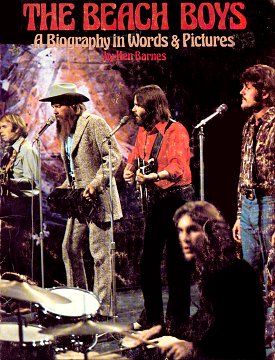
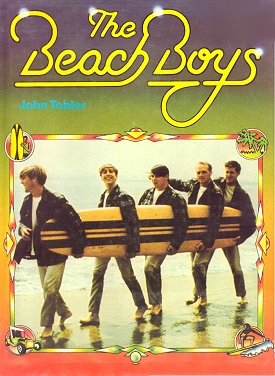
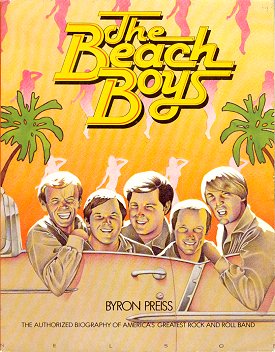
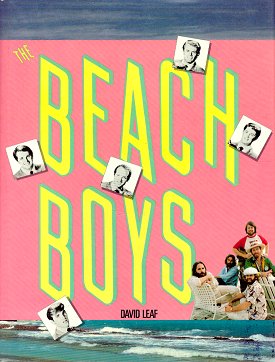
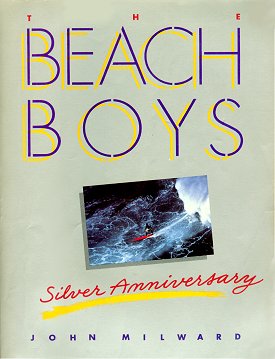
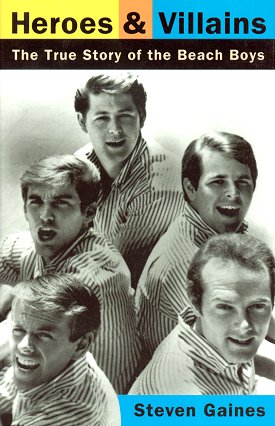
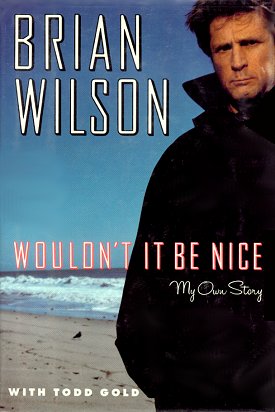
 [In my dream]
I was with my wife and a
friend. We were
with Brian. ...I
saw Brian on ... inner
levels and I saw the
damage that had been
done and I saw the
sadness. I saw the
pain, but most of all I
saw the damage ... I saw
irreparable damage that
had been done ... Brian
is a captive in his
body. Part of
Brian is literally
departed; probably
through drugs; probably
through psychosomatic
withdrawal. He is
trapped and has no
choice but to live it
out in his body... It
was all so sad ... that
I went over in the
corner, leaned up
against the wall and
started crying.
... I cried so hard that
my knees buckled and I
fell down on my knees
with my head in my
hands, crying and
sobbing.
[In my dream]
I was with my wife and a
friend. We were
with Brian. ...I
saw Brian on ... inner
levels and I saw the
damage that had been
done and I saw the
sadness. I saw the
pain, but most of all I
saw the damage ... I saw
irreparable damage that
had been done ... Brian
is a captive in his
body. Part of
Brian is literally
departed; probably
through drugs; probably
through psychosomatic
withdrawal. He is
trapped and has no
choice but to live it
out in his body... It
was all so sad ... that
I went over in the
corner, leaned up
against the wall and
started crying.
... I cried so hard that
my knees buckled and I
fell down on my knees
with my head in my
hands, crying and
sobbing.